

Monday, 24 August, states will meet in Geneva for the twelfth Conference of States Parties (CSP12) to the Arms Trade Treaty (ATT). The ATT is an international treaty that sets common standards for the transfer of conventional arms and ammunition, with the express purpose of reducing human suffering. The Conference of States Parties is the annual forum where States Parties, Signatories, UN bodies, and civil society meet to assess and discuss progress towards implementation and compliance with the ATT.
As in previous years, the CSP will discuss the reports and recommendations from three working groups: the Working Group on Effective Treaty Implementation (WGETI), the Working Group on Transparency and Reporting (WGTR), and the Working Group on Treaty Universalization (WGTU).
Effective Treaty Implementation
Under the chairmanship of Colonel Philippe Lejeune, the Working Group on Effective Treaty Implementation (WGETI) focused on two workstreams: one led by the Sub-working Group on Exchange of National Implementation Practices and the other by the Sub-working Group on Current and Emerging Implementation Issues.
The Sub-working on Exchange of National Implementation Practices focused its discussions on national control systems for brokering and on risk assessment under Articles 6 and 7, drawing on presentations from Canada, Liberia, Chile, South Africa and others. The Sub-working Group on Current and Emerging Implementation Issues opened a new discussion on the scope of the Treaty and national control lists, continued work on industry due diligence and on gender based violence risk, and took up three ad hoc items: maritime security, risk assessment of arms exports to Sudan, and the reassessment of granted authorizations under Article 7(7).
One of the most consequential outcomes of this year’s WGETI is a proposal to formally integrate a step-by-step flowchart for assessing the risk that a transfer will be used to commit or facilitate serious acts of gender based violence or violence against women and children into the Voluntary Guide on Implementing Articles 6 and 7. Control Arms proposed the flowchart in 2025 and has worked with states over the past year to refine it. It sequences the Article 7(1)-(3) assessment into six clear steps, correcting an earlier version that determined “overriding risk” before weighing mitigating measures, rather than after. If CSP12 adopts it under recommendation 72.E, it would become the first operational tool of its kind under the Treaty.

Three other items are worth noting. States are asked to call on all parties to regulate brokering (recommendation 72.a.), a sign that they need to undertake further work at the national level to ensure compliance with Article 10. There is also a push for consultations on voluntary guidance linking industry human rights and humanitarian law due diligence to Treaty implementation (see recommendation 72.d). Lastly, Control Arms initiated an ad hoc discussion focused on how states apply Article 7(7) in practice, using the conflict in Sudan as a case study. The WGETI report did not include recommendations for further discussion on this topic. Control Arms believes that this obligation has remained largely untested in practice and encourages ATT states that have undertaken a reassessment based on new information to share their experiences with the WGETI.
A proposed informal group on Treaty scope and national control lists remains unresolved, as delegates have diverged over its mandate and whether it would duplicate existing work. However, three issues are expected to carry over to next year’s WGETI agenda regardless: good practice on national control lists, including how parts and components are regulated and handled; how controlled items are identified in practice, along with other enforcement constraints; and how the Treaty’s scope relates to other instruments. A review of the Treaty’s scope is needed in order to keep pace with developments in practice and technology, but Control Arms has cautioned that recommendations calling only for continued dialogue, without any decision on next steps, risk allowing the WGETI agenda to broaden without gaining direction. An informal discussion could help identify where WGETI can actually make progress, including concrete ways to close gaps in the conventional weapons covered under Article 2(1).
For more information, see the full WGETI report here or the Control Arms brief here.
Transparency and reporting
 WGTR, chaired by Ms. Milagros Winkelried Salazar (Peru), put forward ten recommendations for consideration by the CSP12. Most of these are technical in nature: refreshed reporting templates, continued work on the reporting tool and the Information Exchange Platform, and a push to update Initial Reports rather than folding new implementation measures into Annual Reports.
The recommendation most likely to spark debate is the creation of an Informal Sounding Board Group to provide the ATT Secretariat with direct feedback as it builds and tests its IT tools. Some delegations are not convinced this avoids duplicating the Working Group itself, or are concerned that an additional Group would crowd an already full meeting calendar.
Annual reporting for the 2024 cycle increased slightly from 63 percent in 2022 to 68 percent in 2024 (at the time of the WG presentation, ten months after the deadline to submit 2024 annual reports). The percentage of states in full compliance with their ATT reporting obligations, meaning they submitted every report due, is 63 percent. The share of reports submitted privately, meaning withheld from public view, is at 31 percent. This reporting trend runs counter to the Treaty’s transparency objective.
For more information, please see the full WGTR report here or the Control Arms brief here.
Treaty universalisation
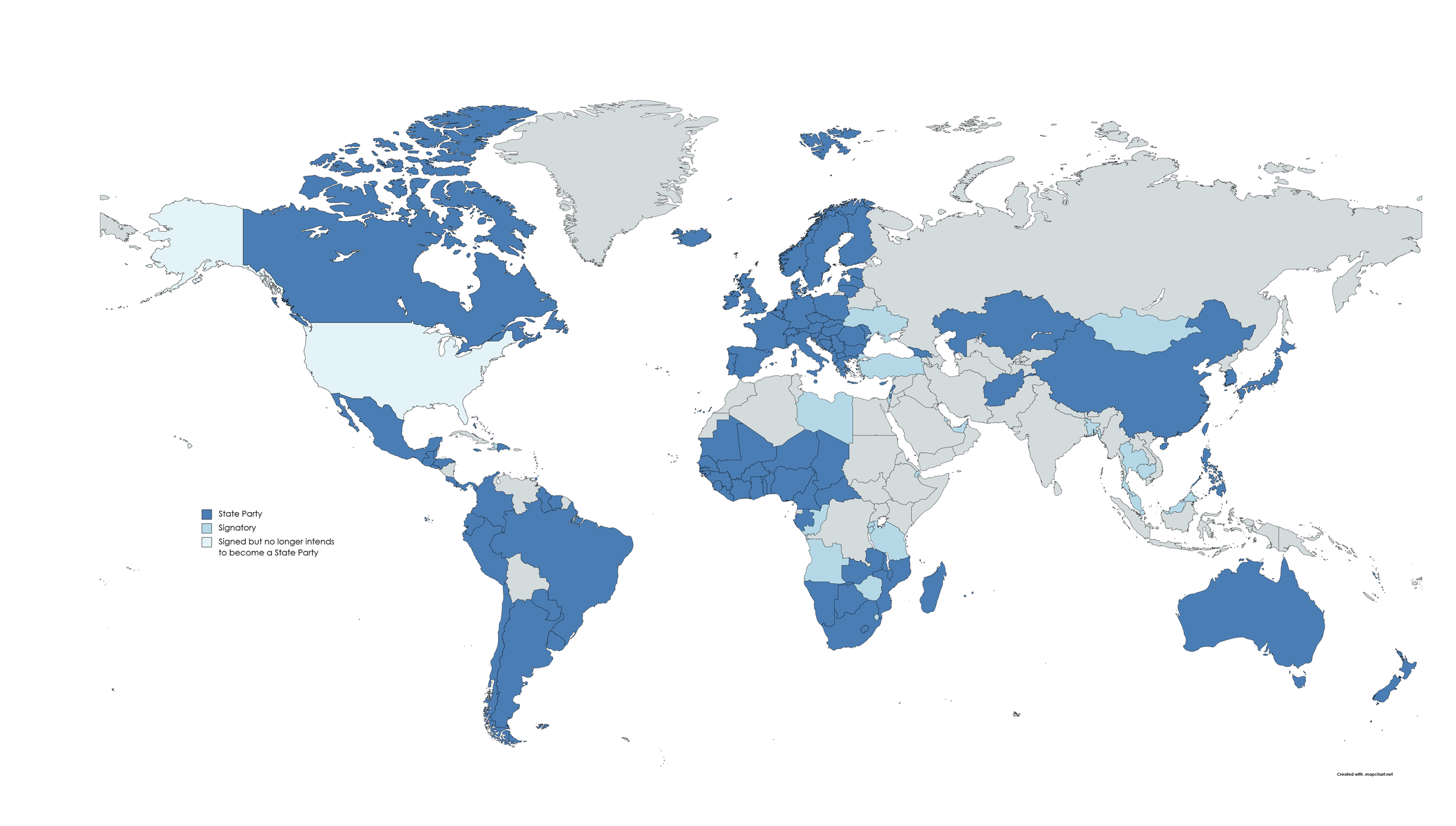
Following accessions by Vanuatu and Ecuador since CSP11, the ATT now has 118 states parties. Despite this, Treaty membership remains lowest in Asia, at 23 percent of states, and Oceania, at 47 percent. As such, the current WGTU work plan concentrated its outreach on these two regions. However, the WGTU Co-Chairs cautioned that key elements of that workplan, notably a network of regional “universalization champions,” have proven difficult to implement. In addition, the current WGTU work plan expires at the end of CSP13. As such, recommendation 31.d “encourages all ATT stakeholders to reflect on the role of the WGTU, its Terms of Reference and workplan”, as part of the broader discussions on the five-year strategy for the ATT.
For more information, see the full WGTU report here or the Control Arms brief here.
Five-year strategy
CSP12 will also consider the proposed draft elements for a five-year ATT Strategy , under Agenda Item 10, currently scheduled for the morning of Thursday 27 August. CSP11 endorsed a UK proposal to develop the elements of the Strategy for consideration and adoption no later than CSP13 in 2027.
The proposal sets out two purposes for a long-term Strategy: to give the Treaty’s structures and activities greater focus and prioritization at a time of constrained financial and human resources, and to enable States Parties to better assess progress and impact against agreed objectives. Control Arms supports the development of a five-year Strategy. The multi-year work plans have kept the Working Groups and CSPs supplied with substantive issues each year. However, there has been limited assessment of progress towards practical Treaty implementation, as well as limited discussion of the barriers ATT States Parties are encountering and the support that might be needed to close those gaps. Control Arms sees the Strategy process as an opportunity to make that assessment, including identifying which provisions would benefit from further discussion or clarification and which should be prioritized.
Control Arms has also stressed that the process needs to be inclusive, drawing more ATT State Parties and stakeholders from Africa, Asia-Pacific, and the Middle East into articulating the issues they want the ATT Strategy to address. Without those perspectives, the ATT Strategy risks missing the range of implementation challenges it is meant to address over its five years.
For more information, see the Control Arms brief here.
